Sunday, 30 December 2012

Disunderstandings

Disagreements are fundamentally human. Misunderstandings even more so. They often lead to frustration, and sometimes wars. The root cause isn't always clear to both parties. Sometimes the parties disagree, sometimes they misunderstand each other, and sometimes they confuse the two.

Disagreements arise from divergent view points. By way of illustration, let's say that Roger and Karen work for a company that wants to build flying cars. Roger likes the idea of flying cars but Karen would rather cars not fly. Karen has her reasons for not wanting the company to make flying cars, reasons which she may or may not state. But reasons aside, she just doesn't think cars should be allowed to fly. Roger may think that Karen simply doesn't understand why flying cars are such a great idea. The problem here is that understanding and agreeing are two different things. For example, Roger believes that flying cars will earn the company a lot of money. Karen understands the potential for financial gain, but she believes that safety concerns supersede monetary gain. One may understand a viewpoint, but still disagree with it.
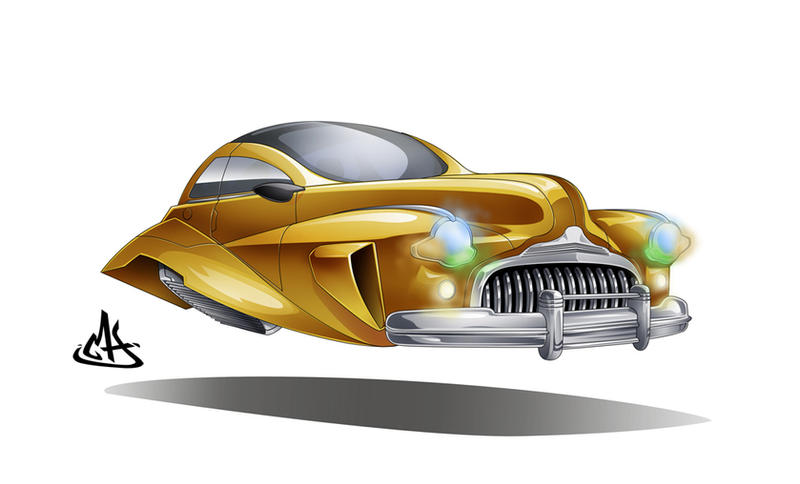


Misunderstandings tend to be even more complicated. Let's introduce Alicia. Unlike Karen, Alicia likes the idea of flying cars. But as an engineer, Alicia knows that there are limitations which prevent the company from making flying cars. She may present these reasons, and explain that while flying cars are a great idea, the company can't build them just now. Roger of course disagrees. He thinks that the engineers can do anything they set their minds to, and that they should just get it done. This situation may quickly deteriorate as both parties get annoyed with each other. This is a disunderstanding.

Disunderstandings arise when one party misunderstands the reason for a disagreement. In this case, Roger and Alicia disagree on the issue of whether the company should make flying cars. But Roger misunderstands Alicia's reasons for not wanting to pursue the project. In his mind, there is no distinction between Alicia and Karen. He confuses real limitations, which he may not understand, with an unwillingness on the part of the engineers.

To avoid disunderstandings, both parties should seek to understand the other's position. Only then will they be able to differentiate between a disagreement based on personal preference, and one that arises from constraints. Despite best efforts, sometimes one party just won't get it. In this scenario, a conciliatory approach may be best. Or just ignore them until they get some sense, or go away.

Wednesday, 12 December 2012

The Problem With Politicians

There are people who are great at solving problems in business, technology, social work and other fields. Give them a problem, and they will charge at it, bound over obstacles and break down barriers, until the solution is all that is left. For such people, solving problems is like a drug that leaves them feeling high.

The problem with drugs is that the high you get never lasts, and is never as satisfying as the previous fix. Hence these problem junkies end up seeking bigger problems. Too often, the really big problems are tied up in politics - whether at a company level or in the machinery that is government.

Eventually some problem solving addicts get into politics, thinking that they can apply their problem solving skills to bigger problems. However, politics doesn't solve problems. Politics is about pontificating, justifying, posturing, and rationalising; it is not about problem solving. Faced with this reality, those who enter politics have two choices: become a good politician and forget about the big problems, or leave politics and go back to solving problems that can actually be solved.

Worse than the realisation that politics is an end in an of itself, not a means to one, is the realisation that getting into politics is like joining the mafia - it's not easy to leave. When people get into politics with good intentions, they either get disillusioned or absorbed by it. Then, sadly, the problem solvers unwittingly become part of the problem.

Sunday, 18 November 2012

Feature Tantrum

One of the most annoying things that a company can do, is to take away a service or a feature and not provide a comparable alternative. Such dastardly moves often lead to consumer outrage, massive inconvenience, and utter frustration. The government of Jamaica did that when they opened the Portmore leg of the toll highway. Apple did it when they removed Google Maps from iOS devices. And now LIME has committed this heinous sin as well.

LIME has a data service which can be accessed using a 3G modem dongle. You can signup as a pre-paid or a post-paid customer. The pre-paid service is great for people who have dedicated Internet connections at home and work, but who may occasionally need Internet on the go. Having a pre-paid service that you topup as needed saves having to pay a monthly bill, for a service that you may use rarely. And at J$100 for one day access, it's a steal!


Now this wouldn't be much of a rant if something didn't go wrong. Here is where it goes downhill. LIME used to allow you to add credit to your pre-paid phone, by texting the voucher number to 124. The recently discontinued the service, instead now returning an error message indicating this when you attempt to use the feature. How dare they! To their credit, the message is actually quite helpful, as it provides an alternative to add credit to your mobile phone. But there-in lies the problem: the alternative only works on a mobile phone, not on a computer with the USB dongle attached!

Customer care was equally helpful; they provided alternative topup methods such a buying credit online, or doing a direct topup. But there are still instances in which you need to use a voucher, because that's what you have. Unfortunately, the only workaround they could provide for adding a voucher is to remove the SIM card from the modem, and put it into a phone. Not only is this inconvenient, but it also assumes that you have a LIME phone which you can crack open and stick the SIM into. iPhone 5 owners are definitely out of luck, as this devices uses micro-SIM cards, while the modem uses the regular (jumbo?) SIMs.

Whoever it was at LIME that decided to shut down this feature, obviously overlooked the mobile Internet users who would need to topup using vouchers. If they keep this up, they will join the ranks of Claro, and we all recall what happened to them. Fix it LIME!

Sunday, 4 November 2012

Customer Service

Some view customer service as a race. This is especially the case when they are incentivised to keep the queue short, or to dispatch 100 calls a second. These are the ones who talk quickly and never hear what you say. That is not customer service. That is customer riddance.


For others, customer service is spitting out all the information from their manuals and training. You can identify these people by the headache you have, once they have finished listing the million and one features of the product or service; or the reasons why what you describe cannot happen. Once again, that is not customer service. That's customer innundation.

People who truly serve customers should be able to answer one question in the affirmative: was I helpful? Better yet, ask the customer and see what they say.

Sunday, 21 October 2012

Man Enough

The status quo for appropriate male behaviour is increasingly worrying. Crass behaviour has not only become the norm, but it is also expected. It is the standard by which masculinity is judged by both genders. What is sad is that many women, consciously or not, have also lowered their standards and have come to accept poor quality in men.

It started sometime ago with speech. Poor speech, rather than being an exception, or being restricted to the uneducated, is now generally acceptable. To be clear, this is not a critique of language and culture. What is irritating is that any boy child who expresses himself properly, clearly, and in perfect english is likely to be teased for sounding like a girl. It's seems that only girls are capable of enunciation! What is more disturbing is that even grown women continue to stereotype men who sound 'proper', and speak well.

Then there is the issue of grooming. Since when did neatness and a clean appearance require a label? Whoever invented the term 'metrosexual' obviously felt a need to reassure themselves of their masculinity. Why was this necessary? Because apparently only gay men pay attention to their appearances. So the exceptional men who aren't sloven, and detest sloppiness, desperate to avoid being mistaken as gay, hurry to create a new category for themselves. If society's standards for men hadn't sunk into a quagmire, this would have been completely unnecessary.

Finally there is the matter of how men are allowed to treat women. I won't lay the blame squarely at the feet of women, but some are to blame. If a man isn't cruff, doesn't objectify women, and is generally a nice guy, then he will either be considered a pushover, or will have his sexual orientation questioned. Many women keep gay male friends because they make them comfortable, they understand them, and they don't try to get into their skirts. Should a woman happen upon a guy who is all of the above, except gay, she becomes aghast and disbelieving.

In a society where good qualities in men are mistaken for femininity or raises eyebrows about his sexuality, it is little wonder that so many men would rather behave as expected. This leaves few real men as bulwarks against the erosion of the male gender role.

Tuesday, 9 October 2012

Don't Spare The Cow

In 1975, a brilliant engineer at Kodak invented the first digital camera. In an effort to protect its film business, the management team at Kodak hid the invention. Almost four decades later, this pioneer of the photography industry has filed for bankruptcy.

In 2002, Apple invented the iPod. It quickly conquered the music player industry, and by 2007 almost 50% of Apple's revenues came from the iPod. That year a new phone was released, one that would cannibalize iPod sales and eventually dominate both the mobile phone and mobile media markets. A mere five years later, the iPod has been relegated to a minuscule 3% of Apple revenues.

At face value, the paths of these two innovative companies seem to have taken a turn for the worst with the introduction of newer, better technologies. But there is a conspicuous difference, that changes the picture (no pun intended) entirely. The device that killed the Apple iPod was the Apple iPhone. What's even more remarkable is that Apple deliberately set out to create a device, that would destroy their wildly successful music player.

Apple knew that the iPod would not be forever successful. They recognized the potential for smartphones to kill their cash cow. They also recognized massive room for improvement in the user experience offered by mobile phones. They decided to effect a paradigm shift, a change that would make mobile phones better to use, and also the ultimate media device.

Apple bet their iPod revenues on the success of the iPhone. The results of this gamble paid off. Five years later, with consistent and steady growth, Apple is the largest company in the world, and it's $100,000,000,000 in the bank is more money than even the US government has in its coffers. A stark contrast to the bankrupt Kodak.

Kodak died because their management lacked vision. They should have known better, as their founder  twice before gave up profitable business models to move to disruptive new technologies. The well timed moves from dry plate to film, and then from black and white to colour kept Kodak at the helm of the photography industry for decades. 

Kodak completely missed the digital photography revolution, when they could have been it's vanguard. And as irony would have it, ultimately it wasn't the digital camera which killed Kodak. It was the popularity of the mobile phone, with the iPhone leading the pack. While Kodak was desperately trying to compete in the digital camera market, that market's death knell sounded every time a camera equipped cell phone faked a shutter sound.

Kodak and Apple were two very different companies, in unrelated industries, taking unrelated decisions. Their industries were brought together by fate, culminating in the death of one, and the dominance of another. Had Kodak maintained the vision of its founder, it could have dominated the digital photography industry, perhaps offering advanced digital technology to the likes of Apple and other mobile phone makers.

Apple killed their cash cow and birthed an even bigger one. Kodak watched their cow wither and die. To enjoy continued, unrivaled success, companies should realize that protecting their cash cow may require that they sacrifice it on the altar of progress.

Sunday, 30 September 2012

Poisoned Apple

Apple tried to kill me. No, seriously they did. If you own an iPhone, iPad, or iPod Touch, look out! Apple may try to kill you too. Before I tell you how, allow me to provide some background.

On September 12, Apple announced the iPhone 5 and showed it off to the world. At this event, they also demoed a spanking new app called Apple Maps. Apple Maps was great to look at, and received many accolades from journalists who tried it out at the iPhone 5 launch event. Plus, Apple was arguably justified to create their own mapping app, since the iOS version of the Google App was missing key features such as turn by turn navigation. Said features being available on Google's own Android OS.

With the release of iOS 6 on September 19, Apple replaced Google Maps with this home grown app, fresh off the orchard. But this app quickly spoiled and turned sour as users began to find gaping holes in the apps accuracy. Some users in the UK can't get home, because their entire town is missing from Apple Maps. Our poor friends in the US have had their Lady Liberty kidnapped. Meanwhile out in the East, Apple has single handedly solved the Senkaku Island debacle by duplicating it. These are but a few of the many bugs in this new app.

Like many users who upgraded to iOS on their iDevices, I am disappointed with the new Apple Maps application. But my disappointment is made more personal by the attempt at my life mentioned earlier. After downloading the new iOS upgrade, and launching the spiffy new maps app, I decided to ask it for directions from home to work. Lo and behold, the app gave me directions which would have sent me the wrong way up a one way street!

At first I dismissed this as a glitch, thinking that Jamaica wasn't big enough for cartographers to pay much attention to. But after reading of what has been dubbed the 'mapocalypse', I decided to try the same directions on Google Maps. And guess what! Google gave me safe, correct directions to work. Good job Google! And to Apple I say, 'Don't Be Evil'.

Apple's move to completely do away with Google Maps may have been premature. Let's hope it doesn't take them as long to fix this issue, as it did for them to implement copy and paste on the iPhone.

Sunday, 23 September 2012

RIM Needs a Hat Trick

Research In Motion (RIM) dominated the smartphone market at the turn of the century. Their BlackBerry smartphones gained a foothold in the business world, with corporations and individual business users. Pretty soon consumers also discovered the usefulness of their devices. And then Apple happened. Apple's iPhone showed the world that every other phone was broken.
Having been czar of the smartphone realm, it is arguable that RIM lost the most when Apple invaded. The company attempted to stem the tide of losses with overhauls to its devices, it's operating system, and by introducing a tablet. While decidedly losing relevance in markets such as the US, UK and even their home country Canada, they maintain a foothold in developing regions where they are still considerably more affordable than other smartphones. The BlackBerry Messenger platform also keeps some people loyal, many owning the device solely because of the ubiquity of the messaging service.

RIM is not dead yet, but I'm hardpressed to name a technology company, besides Apple, who staged a successful comeback after losing relevance. Palm, Yahoo, Nokia, Netscape, Gateway, and America Online all failed and never returned. And that was certainly not an exhaustive list. If RIM is to avoid relegation, they will have to accomplish something that the records say is impossible. In this arena they can perhaps take a play from the books of Spain's national football team. They will have to change how the game is played, take bold risks, and stick to their guns. The question is, do they have the gusto to pull it off?

Changing the game isn't easy, and it may not pay off right away. When Spain decided to do away with the forward position, many called it suicide. When Apple decided to eliminate buttons from the phone, leaving just one, people thought it extreme. Spain and Apple suceeded by doing things which went against conventional wisdom. For RIM to stage a comeback, they too will need to make things remarkably better, in ways that are obvious only after it's done.

It is also important for RIM to build on the experience and expertise they have accumulated. Heralding from the days of their two way pagers, the BlackBerry keyboard has captured the fingers of many a user. However, their first foray into the touchscreen arena failed to take the market by storm. The BlackBerry Storm was clunky and unresponsive. It's 'click screen' was more annoying than innovative. Even diehard BlackBerry fans won't defend that black sheep of a device.

RIM also failed to make the jump into the tablet segment. The Playbook didn't play to their strengths. It was initially missing a native email client, and did not appeal to business users. Lacking BlackBerry Messeger, it also failed to capture the consumer market. They were caught on the backfoot, being forced to respond to their competitors, instead of playing forward in a game they were in control of.

RIM seems to have learned from the Storm debacle, having since released hybrid phones with both keyboards and touchscreens. While not the first to experiment with such a combination, RIM has done a commendable job in making the combination work. If a Playbook 2 ever sees the light of day, they will need to show the world something that Samsung, Asus, Amazon and others haven't discovered as yet. RIM will need to think way outside of the box, if they are to have a future in the new mobile marketplace.

When the pager market died, RIM transitioned to smartphones. Smartphones have evolved, and are less phones, and more mobile computing devices that happen to make calls. If RIM is to pull off a hat trick and succeed with a third generation of mobile devices, they will need to avoid further false starts. Had consumers been as unforgiving as the IAAF, they would have long been disqualified. With their stocks taking a beating, and their market share on the decline, they better act quickly. Their loyal fan base won't be enough to save them when the numbers stop adding up.

Monday, 17 September 2012

Learn, To Teach

"If you really want to learn something, teach it to someone". That old saying is indeed a key to learning to master something - a new skill, a dance, a math equation. Teaching is a skill and also an art, so it's a good idea to start by leaning to teach. Being a very good teacher requires three things.


The first is an understanding of what you're teaching. This almost goes without saying: if you want to teach someone you have to know the subject matter first. Let's use dancing as an example. If you want to learn to dance, you may watch someone and imitate them. Perhaps it comes naturally to you. But if you want to teach someone the steps to a dance, you first have to learn the steps yourself. You have to break them down in your mind, so that you can feed them to someone else, as a parent would feed pieces of a meal to a child. When you can identify the pieces that constitute the whole, and explain how the pieces fit together, then you have truly mastered what you have studied. This is what makes learning with a view to teaching, such a powerful practice for developing the mind.

The second thing required to excel at teaching, is an understanding of how the person you are teaching thinks. This is where the art begins. You will be challenged to connect the dots in a way that your student's mind will grasp. More often than not, teaching someone involves figuring out what they do not undertand. You need to thoroughly understand what you're teaching, so that you can see the small pieces that  your student is missing. To draw on the example of dancing, the difference between taking a step, and taking a wide enough step to provide support for the next move, may be the detail that throws your student off balance. You may never have thought about how you maintain balance when you execute the move. Presented with a student who is unable to maintain balance forces you to think about your balance, and thereby deepens your understanding of how you dance. No matter how well you understand something, you will understand it even more, when you are forced to teach it to another unique mind.

The third and final requirement is patience. It takes patience to mentally scour something that you think you already know. It takes patience to try things a different way, so as to test theories and gain new insight. And of course it takes patience to teach someone whose skull may appear as thick as the floor on which you're dancing. But if you're patient with yourself, and with your student, you will both benefit greatly from the learning experience.

Learning with a view to teaching, is a surefire way to truly comprehend the breath and depth, of any concept or skill. If you approach every learning experience with the goal of teaching it to someone, then you will greatly enhance your learning, and ultimately find it easier to teach someone else.

Sunday, 9 September 2012

Is The Customer Always Right?

When doing business in a competitive environment, a customer always has choices. If they don't like your price, service, payment plan, or you, they can always do business elsewhere. Often overlooked is the fact that businesses also have choices, they don't have to want you as a customer. To some business owners, this is heresy. They attempt to cater to every customer, thinking that they have to try to eke out every possible dollar. Let's examine some scenarios which prove that you can build a business by not catering first and foremost to your customer.

First, let's look at premium brands and boutique businesses. In economics, the concept of price discrimination basically says you can charge more for a product or service, if you can identify, or create, a demand for it. The most obvious example is a business which sells expensive things to people who can afford them. It obviously works, or brands such as Versace, and store such as Saks Fifth Avenue would not exist. Premium appeal, and a premium price tag. Such businesses realize that not all customers are interested in a bargain. Bargain hunters are not their customers.

Sometimes a peculiar business decision has obvious benefits. Other times they are not readily apparent. Express Fitness Jamaica fits the later description. They are a self described "fitness club" bringing a new kind of gym to Jamaica. Membership gives you access to all five locations across the island. They have an automated billing system through which your membership is deducted from your bank account monthly. They also have fully automated twenty-four hour facilities, which aren't staffed beyond specified hours. The lights come on when there is activity, and turn off when you leave.

Express Fitness' model won't cater to everyone. First, some will be reluctant to provide their banking information for automated deductions. Such customers don't like the idea of relinquishing control of their money, or just don't trust a company with their banking information. The gym also doesn't cater to those who may be at the extreme of body building - they don't offer free weight bench presses or weights above a certain amount. Additionally, the facilities are monitored by surveillance cameras to make sure you're not sneaking others in, or loaning out your membership card. The weight restrictions are due to the fact that the facilities aren't staffed around the clock, and they would rather you not decapitate yourself on one of their benches. The surveillance has the two fold purpose of protecting you and safeguarding their business model.

The fact that there is only one payment option, and the lack of equipment for certain classes of gym users means that they will not attract everyone. But do they need to? Conventional business wisdom says you should cater to all kinds of customers so that you can have a larger customer base. But as we already established, there are business that cater to a subset of potential customers, and that works for them. They are in effect saying 'no' to customers who want to be members, but want to pay using a credit card, debit card, or cash. They are also saying no to customers who want heavier weights, certain free weight exercise options, and constant supervision.

A business doesn't need to win every potential customer to be successful and profitable. And sometimes streamlined and efficient operations beat the complexities involved in catering to everyone. If you could earn money with very minimal effort and low overhead, wouldn't you choose to?

Then there is Apple. This most valuable company and brand has a reputation of disdain for customers, at least that's how it appears to the uninitiated. Apple seems to snub it's nose at customers by making their devices non modifiable and closed physically and in software. Apple believes in making great products by controlling the entire user experience. The success of the first Macintosh, the iPod, iPhone, and iPad all seem to lend credence to that philosophy. So as people continue to call for openness, more features, and lower prices, Apple continues to ignore them. Yet they continue to be successful.

Depending on your viewpoint, Apple may be successful either because of, or in spite of their disregard for customer input. But again, what you think doesn't matter to them. Steve Jobs believed that "people don't know what they want until you show it to them". His goal was to "figure out what they want before they do". This philosophy is the touchstone of Apple, directing their every decision. The $100 billion dollars they have in the bank says they're on to something.

Customers make your business successful, but you aren't beholden to them. And you certainly don't have to cater to everyone. You can and should discriminate by price, choice, or philosophy. It will keep you focused, on the ball, and in the money.

Sunday, 2 September 2012

Will You Be My Friend?

When we were children, making friends was a big deal. For some of us it was easy to do so. We were likable, outgoing, and friendly. For those of us who looked different, were reserved, or were unsure of ourselves, forming bonds of friendship was a challenging task. But for all of us rejection was hard to deal with. All it took were the words "I don't want to be your friend" to bring forth a stream of tears, and send us dashing to the comforting arms of a grownup. The parent or teacher would tell us that the other child didn't mean it, or that there were lots of other kids to make friends with. That latter truth may have done little to comfort us as we doted on this lost friend, but we proved it true as we inevitably made more friends and lost others.

As adults, we like to call our friendships 'relationships' and best friends are dubbed the 'significant other'. However, in our quest for a soul mate, we are no different than we were as children. In fact we are worse. We fear rejection, and that often cripples our desire to approach others. When we do find someone, we treat the object of our affections as the only person in the world for us. The truth is that there are many people in the world that we are compatible with. Granted we may never meet half of them, and we may even mess up our relationships with some that we do meet. But like that child who was rejected by a playmate, we take it to heart and feel like it's the end of the world.

Children have short memories, but adults harbour grudges. As a child we quickly forgot the pain of being spurned by a play mate. But as adults we vacillate between depression and anger, pensiveness and frustration. Instead of returning to the playground and finding a new companion, we sulk, mourne and singlehandedly double the profits on alcohol, chocolate, and ice cream at the corner shop.

Maybe losing a soul mate rips us off balance, and triggers a regression to a childlike state. Or perhaps we grow up, but our affections don't.

Sunday, 26 August 2012

Incongruity

Young people often comment on the old fashioned nature of older folks. But truth be told everyone is old fashioned in our own respect. Grandma may not have the lastest fashion, but what she's wearing now was the signet of style at one point. And chances are, what you're wearing now isn't what your younger sister or your son is wearing (and for this your children and siblings are thankful). The older you get, the more you realize that keeping up with the latest trend isn't what life is about.
And if we flip the coin, we end up with another issue. If a middle aged mother ever donned the same outfit that her teenage daughter is sporting, you'd be the first to think how inappropriate that looked for a woman her age. And you wouldn't be the last with such criticism either. There is something to be said for time and place, and in this case the time is measured in decades, and place is your point in life. Both come with expectations.
We all should be comfortable in our skin. And just as a twenty something isn't going to be comfortable in clothes from the 70s, a seventy something isn't going to be comfortable in most contemporary clothes. And they'd both look out of time anyway.

Tuesday, 21 August 2012

The Easy Button

There is value in making something simple. And where there is value, there is the potential to make money. Therefore, simplifying a process is an excellent start for a business idea. Airplanes simplified travel. Coffee makers simplified getting a caffeine fix. Google simplified finding things, in the catacombs that is the Internet.

Like Google, Facebook has also made a name for themselves online. What have they simplified? They simplified finding and connecting with people online. While their stocks have been taking a beating, they remain popular amount the social networking crowd, and will remain that way for the foreseeable future.

Twitter simplified sharing things online. They make it easy to tell the world what you had for breakfast, to give others an opportunity to read that interesting article that inspired you, to get traction on your newest blog post, and even to share the latest fake celebrity death.

I don't know any celebrities, but I regularly write on my blog (which you should read sometime). And I recently found a new use for Twitter. I linked my Twitter account to my Facebook page, my LinkedIn account, my Blackberry Messenger profile, and my blog. Now, if I want to share something, such as a new blog post or an article I read, all I do is compose a tweet using the Twitter client on my Blackberry. The link is automatically shortened, my BBM status is updated, my Twitter feed is fed, my Facebook timeline gets a timely new post, LinkedIn gets the link, and my blog is logged.

I never used Twitter much before now. But this integration simplifies my desire to share things with my readers. Twitter's business model is built on simplifying sharing with the masses.
If you're interested in starting your own business, look for opportunities to simplify something. It gives a new meaning to easy money.

Friday, 17 August 2012

No Pings? Please!

What is it with people who set statuses like: "Sleeping, DO NOT ping me", "Studying, NO PINGS", "Busy, don't ping", and the everlasting variations. What's the point of such status messages? If you don't want to be interrupted, well here is an idea: turn off your phone.


Ok, so maybe you don't want to turn off your phone in case there is an emergency - like a fire in the room and your room mate in the next bed needs to call you to tell you to evacuate. So turn off notifications; yes you can do that. There is a Blackberry profile for calls only - you will not get beeps and pings, only phone calls. "What?! How do I do that?" you ask incredulously.

Here is how you activate this mode. You see that little speaker icon at the top left side of your screen, just below the date?  Click it. Scroll to the bottom of the menu that appears. Ta da! "Phone Calls Only" mode.  Now you can sleep, study, eat, or watch TV in peace.

If you want, you can even customize the profiles to enable and disable certain notifications, have it vibrate instead of ping, and even add special alerts for one or more contacts. This last one might be great if, for example, you want your significant other to be able to get you around the clock. Useful for midnight, um, conversations.

I'm gonna chalk this one up to a lack of familiarity with the technology. Now that you are duly educated about this nifty feature, stop with the silly status messages. That is all.

Monday, 13 August 2012

Response To "Muscular Men Make Poor Boyfriends"

This is a response to the article "Muscular men make poor boyfriends: study" published in the Jamaica Observer on July 9, 2012.

My first problem is with the title of this article. I've seen a couple of muscular farmers and mechanics, but I don't think that's who the researchers had in mind. So let's call these men body builders. Wow, what a positive term. These men are building themselves. This immediately softens the sensational nature of the headline. But given the weak nature of the article, it's best that it avoids drawing any extra attention to itself.


Now let's get to the meat of the matter. The researchers assert that "those who aim for bodily perfection, to the point of obsession, are usually narcissistic". Unless narcissism is muscular disorder, I think these researchers have missed the point of their findings. The problem isn't muscle mass, it's narcissistic personality traits which can exist in any group of men - or women for that matter.

Interestingly, one of the researchers admitted that the problematic boyfriends aren't regular gym users, but fixated ones. Thanks for pointing out the obvious! If someone is fixated on something, they will neglect other things, girlfriends included. But it's also possible that they are mistaking dedication for fixation. Is someone who religiously goes to the gym five days a week fixated? And is that a bad thing? If the answer to those questions is yes, then supremely successful men who work six days a week, and men who go to worship...um...religiously are also fixated and would make bad lovers.

As for the women who had bad relationships with 'gym freaks', soldiers, good looking men and the like, we sympathize. But please don't generalize. If you had a bad relationship with a rich guy, would you warn all other women off rich guys?

Finally, let's tackle that comment about the 'scrawny guy with the nice personality'. First, calling someone scrawny is just not nice.  Shame on you for picking on him! And suppose that guy decides to go to the gym, and gets himself some big muscles, what then? Does he suddenly become less of an option? Highly unlikely. But even if he remains a little guy, don't stereotype and overlook him. While you're at it, stop stereotyping the weightlifters too.

Thursday, 9 August 2012

Interpersonal Ozone

The core of the sun burns at a tremendous temperature of fifteen million degrees celsius. That is roughly the equivalent of one hundred million nuclear bombs exploding every second. Its surface temperature is five thousand five hundred degrees celsius - a temperature achievable briefly by a nuclear bomb, but sustained by the behemoth star at the centre of our galaxy.

The earth hides a distant ninety three million miles away from this nuclear powerhouse. Though separated by immense dark space, we feel it's wrath daily. Were it not for the protective layer of ozone enveloping our planet, we would be burned out of existence by solar radiation.
 
At our most passionate, human beings are capable of radiating emotions rivaling our sun. We glow with affection for our loved ones. We spew vehemence when spurned. We expect the world of our children. We erupt in anger when we feel cheated. We shower a love interest with feelings that radiate from our core.
 
Sometimes our radiance is too much for another to endure. Our expectations seem too bright, or perhaps are expressed prematurely. Well intentioned actions are delivered with more intensity than the recipient is prepared to handle. There is no ozone between us and them. They will either suffer from emotional sunburn, or retreat to a safe distance in the cool darkness.
 
Unchecked emotions can be explosive, even the good ones. In the absence of an interpersonal ozone layer, we must learn to temper our emotions, so as not to overwhelm our recipient.
 

Sunday, 5 August 2012

All Men Are...

In a world where tolerance is word of the day, there is one prejudice which remains rampant and unchecked: negative views toward men. While discrimination cuts both ways, negative stereotypes are predominantly attached to men, and no one seems to be rushing to our defense - not even men ourselves. We seem to be content with being labeled as dogs, unfaithful, violent, and careless with a good man being considered the rare exception. Well I for one have had enough!


I argue that most men are great, and should be viewed as such until proven otherwise! For every man that cheats, I will show you ten that love their women. And I will venture to say that even the unfaithful ones do as well. Love and sex are not inseparable for everyone, including some women. And you can't tell me that women don't cheat! So drop the holier than thou attitude please.

Now I'm not going to sit here and argue that there aren't men out there who are all about sex, and see women primarily as sex objects. There are also men who view women negatively, and are adversarial in their interactions with the opposite sex. Guess what? In many cases a woman is to blame for this. Sometimes it's the very views expressed by women around him which warp a man's view of the opposite sex. All it takes is a woman to be burned by one man, for some impressionable boy to hear that his entire species is flawed. He will either grow up believing what he hears, or subconsciously develop a protection mechanism by hitting out against the offending source of this personal assault. After having his entire gender denigrated, do you think he's going to be any less indiscriminate?

And let's not forget the men who have had their hearts broken. Yes, we have hearts too, and not just the kind that pumps blood. Heartbreak is a human experience not a female one! And just as a woman can be emotionally affected by a bad relationship and subsequent breakup, so can a man. But no one is sympathetic to a man whose heart has been broken. It almost sounds pathetic, unman-like. Don't be surprised if such a man decides to play the field, instead of committing his fragile heart again.

When you assume that all men are the same, you will miss out when a good one passes your way. Your prejudice will blind you, and you will not see that he is different. So quit with the stereotypes. All men are wonderful, amazing human beings in their own right, if you give us a chance to be.

Thursday, 2 August 2012

Growing Pains

When you are a small, new company you have to do things differently to carve out your place in the market. You have to be faster, customer centric, better. You move quickly, adapt readily, you're nimble and innovative.


With success comes baggage. As you grow, so do your expenses, and you become more concerned about making the money you need to continue to exist. It begins to seem as if your existence isn't as much dependent on innovation, as it is on cash flow.

Cash flow is important. But when it all starts to go south is when the business begins to compromise on the things that made it successful, in exchange for a quick dollar. And when they start to focus on the minutia of business, and lose sight of what made them different, the battle is lost. No need to be as customer centric, because losing one customer of 1000 isn't as devastating as losing one of 10.

In order to keep their edge as their business grows, entrepreneurs should always be mindful of what made them succeed. And instead of cutting off old roots, they should keep them firmly planted as they also add new ones.

Sunday, 29 July 2012

Small Minds

"If it's not broken, don't fix it" is a phrase often used as a precaution, or sometimes as retrospective chastisement when something goes horribly wrong. While the pithy saying may seem to be apt in some situations, it can be a dangerous mindset to harbour. This is because for some, it's more than a brief utterance in a particular situation, it is an attitude, a word-view, an overarching principle with which they live their lives.


Some people approach their jobs with a 'don't fix it' mentality. This can be an issue from the lowest of positions, to mid management, and all the way to the top. While it is often thought that a business should be driven from the top, the truth is that it's important to have people with the correct mindset at all levels. If this is not the case, one of two scenarios will transpire. Either everyone will continue to operate as they always have, business as usual. Or those who see areas for improvement, will meet resistance from those who are afraid of change. 


A 'don't fix it' attitude is antithetical to the human spirit. The candle wasn't broken, but Thomas Edison decided to fix it anyway. When an organization employs people who lack imagination, are afraid to act on ideas, or are just plain lazy, innovation will be absent or difficult to achieve.

This penchant for changelessness can also be seen in people's approach to their lives. When confronted with things about themselves that call for improvement, they quickly dismiss such criticism: "Anger runs in the family, that's how we are"; "He called me a coward, I had to show him that I'm not"; "Nobody is perfect". They will rationalize, justify, and excuse. They will do anything but change. Without efforts at personal development, they stagnate and may even persist in behaviours reminiscent of a child.

It is entirely possible for someone to be open to growth and change in some aspects of their lives, but be stagnant in others. A man may be a great father, but a poor manager and leader. A woman may be the model executive, a fine wife and mother, but poor at maintaining friendships. It is important that we engage in regular introspection, to evaluate all facets of our lives in a quest to become better human beings.

Thursday, 26 July 2012

Pothole Mystery

Has anyone else noticed that potholes around the city of Kingston are being mysteriously patched? Something is amiss! It's certainly not the government doing this, as it's nowhere near election time. And the government never uses tax payers dollars to do anything but palliate the crowds before election, and line their own pockets. So who is perpetrating this dastardly deed?

While many of us have noticed these roads being repaired, how many of us have actually seen repair crews? This is certainly not taking place during the day, as there is neither traffic congestion nor detour signs. This is yet another sign that the government isn't doing this, for they only do things that inconvenience motorists and other road users. These actions are definitely being perpetrated by a covert organization, under the cover of darkness!

This begs the question, what are their motives? Perhaps they are seeking to rob the government of their one election tool, besides the empty promises. If this clandestine group patches the roads now, the government will have to use something else to bribe the country when it's time to vote. Maybe the political parties will start giving out free patties at election time. Afterall, the patty tax has made that once cheap food an expensive delicacy. 

Another possibility is that the roads are being patched by criminal gangs, who are tired of damaging their getaway cars, by dropping into potholes at high speeds. Given that the police are getting better at giving chase, this last supposition is highly likely.

Jamaica, be on the lookout! These pothole bandits are armed with asphalt, and are extremely dangerous. They are out to destabilize the status quo, and may be filling a pothole near you.

Tuesday, 17 July 2012

Commercialising Cravings

Ever had a craving? They just come out of nowhere. You'll hear someone say "I feel for some KFC", "I want a Whopper", "I'm feeling for a Pepsi". I wonder how many a marketer rejoices when they hear such utterances.

While hunger is physiological, a craving is more psychology than physiology. Studies have suggested that food cravings start in the mind, with strong mental imagery being a key component. That's the reason the branded food photos look so darn good - that's going to produce a strong, vivid image when a craving comes around. Plaster the company logo all over it and voilà, instead of craving a burger, you're gonna crave a Whopper!

Spend enough money on advertising and you can get into the minds of people, and then their pockets. You'll keep them coming back, even though the food is never as good as in the ads, and the customer service rep never smiles half as much as on TV.

Sunday, 15 July 2012

Choose Your Assumptions Wisely

Assumptions help us function in a world that is always changing. Without them, we would have to constantly consider too many variables, infinite possibilities, and we would have a profileration of mental hospitals.

We assume that the vehicle in front of us will keep moving forward, otherwise we'd play touch and go with our gas pedal. That same assumption is dangerous if we assume that vehicle won't slow down, or make a sudden stop, while we punch out a quick message on our phone. In the critical few seconds in which we are distracted, our environment changes, our assumption becomes false, and we receive a jarring reminder not to rely on assumptions.

Sometimes assumptions are really excuses. We don't tell our family members that we love them, and we don't let friends know that we value them, because we assume that they know. The truth is that we are often afraid to express love and fondness, in a society where that may make us look soft. And some of us are uncomfortable saying "I love you", and other such mushy stuff. Not wanting to be smothered by mush, we save ourselves the discomfort with an assumption that our affections are understood.


Large organizations are built on assumptions. Everyone assumes everyone else knows what they should be doing. Most assume that policies were thought through thoroughly, and are the best of the options available. Some assume that the obvious flaws are obvious to those who can do something about it. Very few realize that false assumptions are crippling the organization.

If we don't question our assumptions, we become stagnant, and miss opportunities for personal growth and improvement. Some assumptions can endanger our very existence. We should always be conscious of the assumptions we have implicitly or explicitly made, and know when to reassess them.

Thursday, 12 July 2012

...And The Law Won!

Today is a sad day for Digicel. Let's have a moment of silence. Ok, that's long enough. And that's about how long Digicel's attempt to challenge the OUR lasted.

In case you haven't been following this debacle, the gist of it is that Digicel wanted to take the OUR to court, to challenge their authority to set lower call rates. But first they had to get permission to take the matter to court, said permission having been denied.


The song above came to mind. Written by Sonny Curtis of The Crickets, and made popular by the Bobby Fuller Four. The chorus goes:

"I fought the law and the law won!"

What is a loss for Digicel is a big win for Jamaican mobile phone users.

Sunday, 8 July 2012

Elevator Etiquette


Do you ever feel like the 'ding' of the elevator, as it stops at another floor, indicates the start of a new round of full contact kick boxing? Ok, maybe that's a slight exaggeration. But it seems that people forget themselves as they hurry to work, or to the next meeting.

First thing they seem to forget is how to wait. Before the door is fully open, people on the outside are rushing to get in. Does no one realize that if they allow people to get out, then there will be more space for them to get in? And it's a lot easier to do so when you're not squeezing by someone on their way off the elevator.

Let's not even mention the ones who don't bother to wait for the doors to open completely. They barge ahead, straight into the unfortunate soul who happens to be standing immediately by the doors. It's usually an awkward moment when their faces end up within kissing distance of each other.

Then there are the impatient ones who don't realize that repeatedly pressing the close button, won't make the doors close any faster. They close slowly for a reason. And should their button pressing little fingers get stuck in the door one day, they will appreciate why the doors are designed to close at that pace.

So the next time you're in an elevator, be sure to stand at a safe distance and observe the games. It's bound to be entertaining.

Sunday, 1 July 2012

Empathy


How often have you heard the words "I understand what you are saying, but...". Growing up, we are taught that it is important to understand - things, people, ideas. But sometimes understanding isn't required, empathy is.  The former comes easier than the latter.

A police officer may understand your explanation, that you were speeding because you just got news that your mom is in the hospital. But he won't let you off that ticket unless he empathizes.

To get to the root of some issues, and truly address the problem, instead of flexing our intellect, we need to exercise our heart.  The next time you are confronted with a problem which seems to personally affect someone - a colleague, a friend, a family member - instead of merely understanding the problem, seek to empathize.

Wednesday, 27 June 2012

Digicel vs. LIME - Clash of the Titans

There should be a law against distributing reading material in traffic. Reading while driving is distracting. And it seems like every week there is a new promotion from LIME or Digicel. Someone should do a study to see if there is a correlation between Digicel and LIME promotions, and traffic accidents. Having said that, I'd like to see more companies hiring hoardes of young people to block traffic.
 
The level of competition we see in the telecommunications industry does not exist in any other industry locally. The liberalization of the market and entry of Digicel, saw Jamaica catapulted to the vanguard of mobile penetration. The efforts by LIME to regain relevance, gave Jamaica a network as advanced as those existing in fully developed countries. And subsequent efforts to best each other has seen coverage wars, data network upgrades, and price slashing bloodbaths. Such competition keeps both companies from stagnation, and ultimately benefits consumers.
 
 
The latest blow by Digicel is a perfect example of this. Digicel has finally launched a mobile data network which will bring high speed connections to your handset. This is an arena in which Digicel has been conspicuously absent, leaving LIME the king of the mobile data hill. LIME's support for a full range of mobile data devices including tablets, coupled with affordable pricing, garnered them a following of road warriors.
 
A few months ago, LIME reduced their already affordable mobile rates. It is now obvious that this was a preemptive move, in anticipation of Digicel's entry into the space. The result is that Digicel's mobile rates are on par with LIME's offering, giving consumers true freedom of choice.
 
Aside from the obvious benefits and growth in the telecommunication sector, other businesses have seen windfalls resulting from the heightened state of competition. Three years ago when Claro entered the fracas, media and advertizing companies had their hands full creating increasingly aggressive ad campaigns. Television and radio stations hardly had time to broadcast anything besides back to back advertisements. Promotion companies handed out jobs, and free tee shirts, to students and others who needed part-time employment...and free tee shirts. And even after the exit of Claro, we have seen this trend continue, even intensifying. And the tee shirts are even brighter too!
 
How much further along in our development would Jamaica be, if we had more companies trying to leapfrog each other, with the same intensity and ingenuity as these two telecommunication giants? Can you think of other industries which would benefit from such competition? Please share your thoughts below.
 

Friday, 22 June 2012

Competition Is Sweet - Per Minute Billing Isn't

Last night Digicel made it's move in response to LIME's onslaught against mobile rates. Digicel reduced it's on-net rate to $2.89, 10 cents lower than LIME's and matched LIME's cross-net rate of $6.99. The fierce competition between these two rivals is refreshing. In no other market do you see as much competition, and to such high levels of intensity, as you find in the telecommunication sector. Keep fighting guys! Each round is a win for the Jamaican consumer.
 
Now while these two giants duke it out, let's try not to get caught up in the marketing. At the end of the day, they are both companies which are out to get more money from our wallets. Ultimately, any move should have the end result of increasing revenues and stacking up profits for shareholders. This may mean giving something with one hand, and taking something back with the other hand, while you're distracted.
 
When LIME introduced their new rates, conspicuously absent were the 'XL' free minutes and free text promotions which predate the new package. Picking up on this exception, Digicel was keen to keep their 'Gimme 5' promotions in place with the introduction of their new package. However, the promotional goodies were significantly slashed. Both companies have reminded the public that nothing comes for free.
 
Something which is also significant about the new package from Digicel is the reversion to per minute billing. This is the most egregious of the recent changes with insidious consequences. A move from per second billing back to per minute billing will see an increase in the cost of the brief, and arguably most common types of calls. I can just imagine some business analyst spending the week crunching numbers, trying to find out how to reduce rates while keeping revenues the same. The solution - take away per second billing. There is no indication from LIME as to whether they have also reverted to per minute billing, but I wouldn't be surprised if they have.
 
Combine per minute billing with the recent emphasis on long calls - talk for X minutes and get the next XX free - and these phone companies are most likely pulling more out of the pockets of the public than their new rates belie. Competition is sweet, but let's not get lost in the tactics and fail to see the raw truths behind the marketing.
 

Wednesday, 20 June 2012

Long Live Chivalry!

In days gone by, acts such as opening a door for a lady, walking on the outside when on the road, or giving up your seat on the bus were considered common courtesy to be extended to women. Now such chivalrous deeds are an exception, rather than the norm. I think the reason for this is two fold.
 
The first and perhaps the most serious problem is the absence of fathers in the lives of young men. Chivalry is handed down from father to son in the same way that values are - directly through instruction, and indirectly by example. The problem in our country is that we have a generation of men who grew up without fathers, many of whom in turn became absentee fathers themselves. Like a spoken language with no one to pass it along, chivalry is a critically endangered practice.
 
The second issue lies squarely at the feet of women who have lowered their standards. Perhaps responding to the decline of gallant acts, they have grown accustomed to their absence and have come not to expect them. When something is not expected, it is less likely to be given.
 
Worse yet are women who either don't understand or don't care for chivalrous acts. I will never forget one experience I had in high school. I grew up in Montego Bay, and back in those days (I feel so old saying that) the city didn't have buses, but were served by ubiquitous route taxis. I was one of two passengers on the back seat of on taxi on the stand. A woman approached the taxi and so I opened the door and got out to put her in. This woman not only refused to get into the vehicle, but proceeded to cuss and chastise me for wanting to put her to sit in the middle. Not wanting to sit in the middle is fine as a personal preference, but the crass behavior was uncalled for, and absurdly I was the one that was embarrassed.
 
In hindsight, that experience had an unconscious effect on me. I find that I hesitate to do chivalrous things because I am uncertain of whether the recipient will be accepting or offended. While this is perhaps an irrational reaction, is it also not a conscious one. And I will assert that one may be considered anachronistic at best, and in extreme cases "soft" or quaint when one persists in socially uncommon acts. Sadly, changing views on what is considered manly have also left chivalry marginalized.
 
Having realized the forces that have unknowingly moulded me, I have now resolved to be counted among those who form the last bastion of chivalry. I will hold the line; I will stand my ground! I will not allow women who do not appreciate courtesy, nor unsophisticated miscreants who scoff, nor my own desire to blend in to curtail my gallantry.
 
To women I sound a call to arms: insist on valour, and train the uninitiated. When a man misses an opportunity to be chivalrous, call him on it. Most importantly, allow a man to be a man! Accept offers of assistance. It doesn't undermine your ability to take care of yourself, it only means that he wants to take care of you too. Let him open the door, don't race him for the handle. Allow him the opportunity to pull out your chair. Give pause so that he may open the car door. And never forget to acknowledge such acts; they are rare and to be appreciated.
 
What chivalrous acts would you like to see more often? Please share your thoughts below. And share this article with others!
 

Long Live Chivalry!

In days gone by, acts such as opening a door for a lady, walking on the outside when on the road, or giving up your seat on the bus were considered common courtesy to be extended to women. Now such chivalrous deeds are an exception, rather than the norm. I think the reason for this is two fold.
 
The first and perhaps the most serious problem is the absence of fathers in the lives of young men. Chivalry is handed down from father to son in the same way that values are - directly through instruction, and indirectly by example. The problem in our country is that we have a generation of men who grew up without fathers, many of whom in turn became absentee fathers themselves. Like a spoken language with no one to pass it along, chivalry is a critically endangered practice.
 
The second issue lies squarely at the feet of women who have lowered their standards. Perhaps responding to the decline of gallant acts, they have grown accustomed to their absence and have come not to expect them. When something is not expected, it is less likely to be given.
 
Worse yet are women who either don't understand or don't care for chivalrous acts. I will never forget one experience I had in high school. I grew up in Montego Bay, and back in those days (I feel so old saying that) the city didn't have buses, but were served by ubiquitous route taxis. I was one of two passengers on the back seat of on taxi on the stand. A woman approached the taxi and so I opened the door and got out to put her in. This woman not only refused to get into the vehicle, but proceeded to cuss and chastise me for wanting to put her to sit in the middle. Not wanting to sit in the middle is fine as a personal preference, but the crass behavior was uncalled for, and absurdly I was the one that was embarrassed.
 
In hindsight, that experience had an unconscious effect on me. I find that I hesitate to do chivalrous things because I am uncertain of whether the recipient will be accepting or offended. While this is perhaps an irrational reaction, is it also not a conscious one. And I will assert that one may be considered anachronistic at best, and in extreme cases "soft" or quaint when one persists in socially uncommon acts. Sadly, changing views on what is considered manly have also left chivalry marginalized.
 
Having realized the forces that have unknowingly moulded me, I have now resolved to be counted among those who form the last bastion of chivalry. I will hold the line; I will stand my ground! I will not allow women who do not appreciate courtesy, nor unsophisticated miscreants who scoff, nor my own desire to blend in to curtail my gallantry.
 
To women I sound a call to arms: insist on valour, and train the uninitiated. When a man misses an opportunity to be chivalrous, call him on it. Most importantly, allow a man to be a man! Accept offers of assistance. It doesn't undermine your ability to take care of yourself, it only means that he wants to take care of you too. Let him open the door, don't race him for the handle. Allow him the opportunity to pull out your chair. Give pause so that he may open the car door. And never forget to acknowledge such acts; they are rare and to be appreciated.
 
What chivalrous acts would you like to see more often? Please share your thoughts below. And share this article with others!
 

Monday, 18 June 2012

Misplaced Loyalty

LIME recently embarked on a Jack The Ripper style assault against mobile rates, slashing them by 40-80%. This follows previous reductions in mobile Internet rates, improvements in customer service, and increased support for mobile devices such as Apple's iPhone and iPad, and Samsung's Galaxy phones and tablets. Overall, the company has been making great strides.
 
 
Yet, as LIME improves there are people who still dismiss them with a deep seated hatred. They remark that LIME can keep their new rates, and recall the days when LIME was C&WJ, TOJ, or even the long gone Jamintel. They rehash the history of robbery and injustice perpetrated by this company. Granted, LIME did rape this country back in the day, and kept us in the dark in terms of telephony. In fact, they were like a spawn of the devil. Ok, maybe that's a bit harsh - they were an adopted child of the devil. But competition has changed them, made them better.
 
Alas, competition has not won the hearts of Jamaicans who spurned them. When Digicel came to Jamaica, the populace rushed to embrace them like a child running to meet the rich aunt from foreign. And Aunty Digicel did shower us with gifts - flashy phones, lower rates, and good customer service.
 
Fast forward 12 years and most Jamaicans are still in love with Digicel, even though LIME has surpassed them in many ways - these rate reductions being the most recent frog leap. Granted, it's not always about the money, or the technology. Digicel has done a tremendous job moving Jamaica forward. They have also taught the greater business community how to be better corporate citizens. All of that is worthy of appreciation and loyalty.
 
At the end of the day though, this is business. Companies are not people. Even if you want to believe that the past incarnations of LIME deliberately set out to rob this country, there are two things to note.
 
First, the government are the ones which allowed this. If the situation was reversed, and Digicel was the company which had the monopoly back in the day, things would have been no different. That is the nature of monopolies - they rob us of choice, and the lack of alternatives give them free reign.
 
Second, all the people who were at the helm of that ship that rammed into this country are probably no longer there. They are long gone, even deceased. So just who exactly is there to hold a grudge against? I repeat, companies aren't people.
 
It could also be argued that Digicel has virtually become a monopoly, abusing this country as LIME did in the past. Look at the rates they previously penalized their own customers with for calling outside of the Digicel network - $14 to $17 dollars per minute! Those rates still stand if you haven't signed up for their flat rate service. Furthermore, their $8.99 rate was the first reduction we've seen in a decade. Does that sound like a company that has your interest at heart?
 
Allowing resentment for past wrongs to simmer and affect our financial decisions, is like stabbing ourselves in the wallet. Remember, Digicel doesn't love you, they just want your money.
 

Thursday, 14 June 2012

LIME Rises To The Challenge

A few months ago, Digicel launched a pre-emptive strike, slashing mobile rates by a whopping $1.01. Needless to say I wasn't impressed. But the marketing campaign surrounding it was very good - in an 'annoying get stuck in your head' kinda way. I thought to myself at the time, that even if LIME responded by lowering rates, that would seem like a 'follow fashin' move. But lo and behold, they have responded by lowering rates so drastically that the effect has been public amazement.
 
 
LIME has lowered rates to an unprecedented $1.99 and $2.99 for LIME to LIME calls, for postpaid and prepaid customers respectively. International calls are also $2.99. And here is the sweetest part: it is now cheaper for a LIME customer to call a Digicel customer, than it is for a Digicel customer to call a fellow Digicel customer! LIME to Digicel calls are now $6.99, a full $2 cheaper than Digicel's flop $8.99 rate. How ironic is that?
 
When I first discovered the new rates, I figured I'd wait for the catch. I went to LIME's website to read the fine print, only to discover that there is none. The rates are so unbelievably low, that some commenters on their Facebook page even joked that the LIME website had been hacked.
 
When Digicel made their move a few months ago, one could argue that it was more fanfare than substance. With this mad downward dash by a competitor who has very little to lose, how low can Digicel afford to go? In the rate wars, is this move by LIME a checkmate for Big Red? Regardless of your views on either mobile network, such aggressive competition can only benefit consumers. And when it comes to doing business, in the end I am loyal to one thing - my wallet.
 

Wednesday, 13 June 2012

Unintended Consequences


Look before you leap. Think before you act. An ounce of prevention is worth a pound of cure. The English language has no shortage of phrases, which encourage one to evaluate the possible consequences of our actions. But truth be told, this is a nigh impossible task. With each choice we make, we simultaneously create and destroy innumerable possibilities. It's inconceiveable that we could anticipate all of them.

Things get infinitely more complicated when we contemplate human interaction. Even if we lived on a desert island, the actions of people thousands of miles away, could affect the quality of the fish we feed on to survive our solitary existence.

Most of us don't live on a desert island, so things are even more complex. When the web of our choices combine with those of others, they form a structure so complex, that there will always arise an unintended consequence from an innocuous act. And sometimes the consequence will affect others, more than ourselves.

Worst Invention Ever!


Speaker phones are the worst invention ever! They are immensely dangerous in the hands of complete idiots. Why would someone create such a device? No one should be subject to the torture of overhearing your boring meeting, or your sappy conversation with your lover. Sure, they may be useful for having a conference call, so restrict them to conference rooms! Don't put them on cell phones, in the hands of the same people who text and drive. It's a recipe for disaster.

Worse yet are the absent minded morons who put you on speaker phone, without telling you. They aren't the ones who suffer the unintended consequences when you blurt out something meant for their ears only. Not the ears of your girlfriend and her best friend who you think is hot. Certainly not the ears of your boss who was in the same room. And not the ears of the friend whose surprise party you're planning.


A word to the wise: do you see that convenient speaker phone button? The correct answer is no, you don't see it. Forget that it's there!


Tuesday, 5 June 2012

You Addict You!

Why do people like to bandy around the term 'addiction', attaching it to anything that achieves popularity and mass appeal? There was computer addiction, then Internet addiction, then Facebook addiction, BBM addition...well maybe that last one is real.

The word addiction has a negative connotation, and expresses disapproval more than anything else. When people see a behavior that they somehow disapprove of, they label it an addiction and the media takes it and runs with it. I can just picture some psychologist who is annoyed that their child is spending too much time on Facebook, writing the first article on this new 'addiction'.

Now if this child were busy reading books, psychologists wouldn't label them as a book addict would they? Nope, instead it's their peers who would label them a book worm, with the same negative connotation. There is something to be learned here.

The label isn't about the activity, it's about acceptance. Your fellow Facebook users aren't going to call you an addict, because its an acceptable behaviour within your group. Your parents aren't going to dissuade you from reading because that's an acceptable behaviour for their generation.

The problem here is the gap between those who accept new ways of doing things, and those who don't.  Someone who is 'addicted to the Internet' may really be craving knowledge; they may be no different from someone who loves reading.  Someone who is 'addicted to social media' may just love connecting with people - virtually or in real life.  And BBM addicts just love conversation, and probably used to get run out of class for talking too much.

What some fail to realize is that as the world moves forward, there are new ways to do old things. Reading books was about learning, keeping current, building the mind, and even entertainment and adventure. As new means of accomplishing all of this were developed and became popular, some dinosaurs couldn't adapt. They disdain what is new, often because they don't understand it, and sometimes because they don't care to.

I wonder if any of his contemporaries called Gutenberg a book addict?

Wednesday, 23 May 2012

How Do You 'Steal' 'Credit'?

What all started as a broadcast message, which I ignored like everything else, has now turned into a headline news item.  Here is the 'under the rock summary' (you know, in case you have been living under one):  A broadcast message has been making rounds on BBM claiming that answering calls from certain phone numbers (with overseas area codes), would result in your credit being stolen.  The only reason I've paid this any attention is that it was reported by TVJ news, and corroborated by an acquaintance (who is still unsure, but had an experience which left him suspicious).

However I'm still not buying this story as it is told.  Something is amiss.  You can't 'steal' credit, when such credit exists only in the Digicel system.  When you make a call, you don't transfer credit to Digicel, or to anyone.  You simply get an allotment of minutes equal to the money you spent.  If someone calls and depletes your minutes, all they have accomplished is just that - they have depleted your minutes.  They have in no way enriched themselves in the process.  This is not a financial transaction of any sort.  It just doesn't add up.

Now let's assume for a minute that some clever person, has figured out a way profit in someway from depleting your minutes.  Many years ago, there were issues in the landline telephone system which 'crossed' telephone lines (how is that for a technical term) and allowed people to make calls which were charged to someone else's account. Let's say that someone has figured out a way to do the same thing on a mobile network- somewhat like making a 'collect call' (pun maybe intended).  In this scenario, they have not stolen any money, instead they have used your purchased minutes to make calls. As complex a scenario as this would be, it's still a more plausible explanation than is being offered right now.

If the foregoing is in fact the case, then the perpetrators must be local, since these calls would be limited to being initiated within the Digicel network.  As we established, 'credit' is not real money, so it's not like they could transfer it outside the country and use it.  While the numbers indicate calls from overseas area codes, they could be spoofed to apear that way.

Alternatively (and most likely), the purported scammers could be trying to get you to call them back (by promising prizes and money), thereby generating a call to a pay per call (or pay per minute) number - like those psychic hotlines or phone sex lines they advertise on late night TV.  The same could apply to getting text messages from them - they may be trying to prompt a response, which would earn them money when you text a premium number.  This is my favourite explanation as the simplest answer is usually the truth - and the truth is that people usually get scammed because they want something for nothing.  The only problem is that this explanation doesn't cover the cases of people, who report losing credit from just receiving the call.

If this is indeed a scam that initiates outbound calls, it smacks of an inside job, and should be easily traced to the source.  But I think that is an unlikely scenario.  Applying Occams razor, this is most likely a case of people falling for a scam, and calling back the numbers.  Having being suckered, and conned out of their credit, they are not likely to admit that they initiated calls to the numbers in question.

Monday, 21 May 2012

Simple vs. Easy

There is a difference between something being simple, and something being easy. That was a very simple statement, but it may not be easily explained. Perhaps it's best explained by examples, like my previous sentence. See how all of those flowed? Simple.

It's simple to meet people, but it may not be easy. Perhaps you are introverted, and it takes considerable effort and loads of energy to talk with others. It may even be hard for you to be in social settings where this is possible. It may just not be your natural milieu; it's kinda hard to breathe being a fish out of water.

Starting a relationship is easy, but relationships aren't simple. Humans are too complex, and our complexity grows exponentially when we add more people - couples, families, communities, countries; that might as well have been the fibonacci series.

Follow your gut. Simple idea, easier said than done. We sometimes rush headlong into things we know will end badly.

The less we confuse the simplicity of an idea, with the effort required to execute it, the more understanding we become - of ourselves, and of others.